
 English
  Français
  Español
  Português
  العربية
  Русский
  Bahasa Indonesia
  中文
中文 Used Container Chassis Trailers — Skeletal Semi-Trailers Sourced to Order
A container chassis trailer — also called a skeletal trailer or skeleton trailer — is the backbone of port-to-depot and inland container haulage. It is a bare steel frame with twist-lock corner fittings, built to carry 20ft or 40ft ISO containers without the dead weight of a solid floor. At Sigma Used Trucks we source inspected, refurbished container chassis semi-trailers to order and pair them with our in-stock tractor trucks so you receive a ready-to-work combination, CIF to your port.
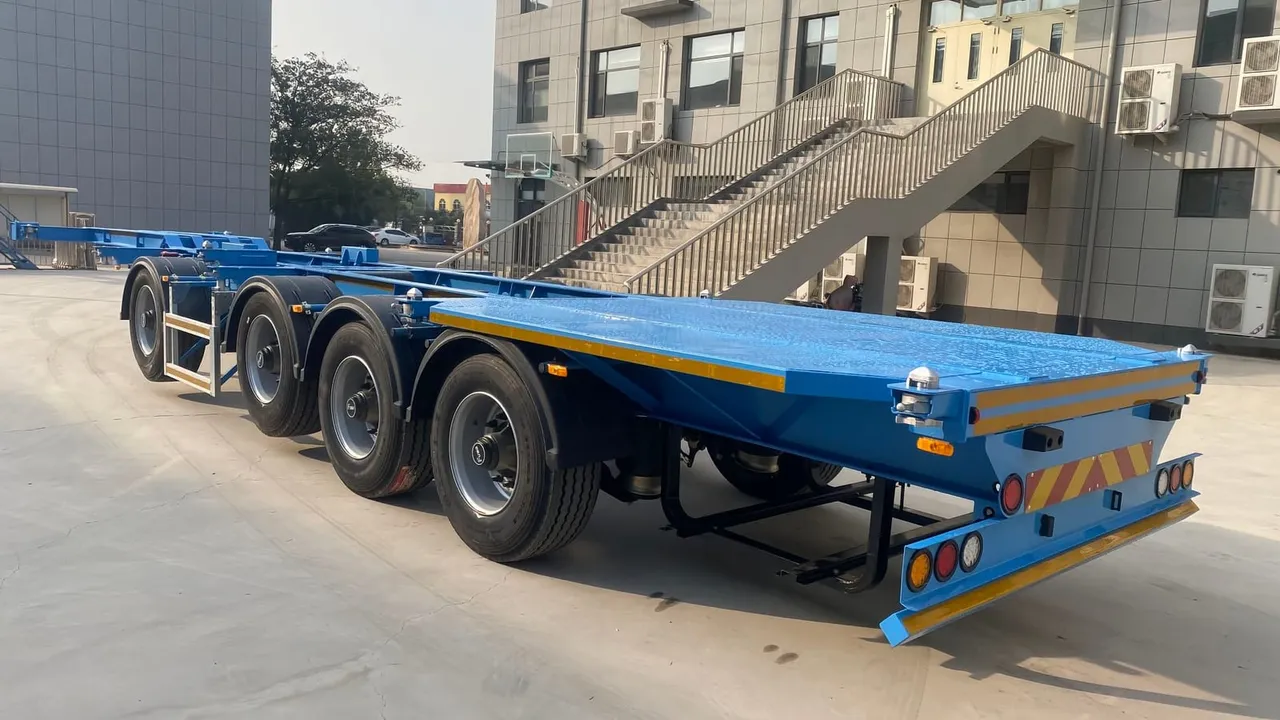
What Is a Container Chassis / Skeletal Trailer?
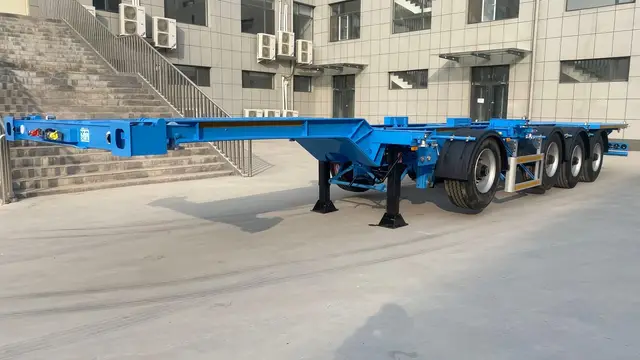
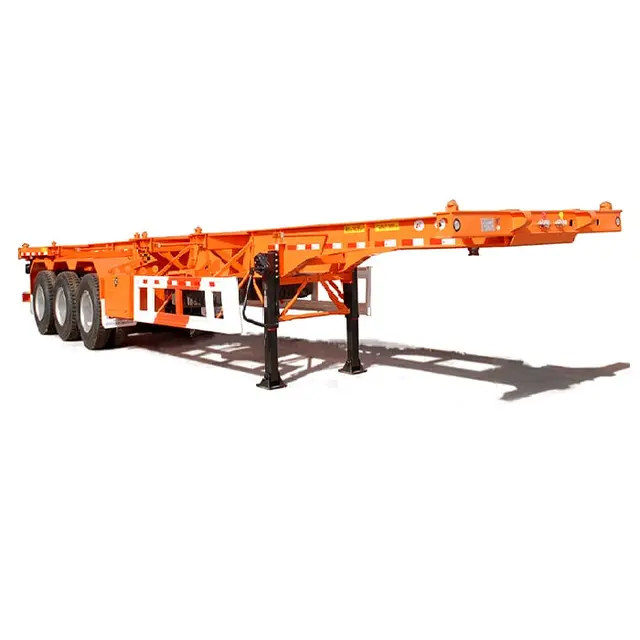
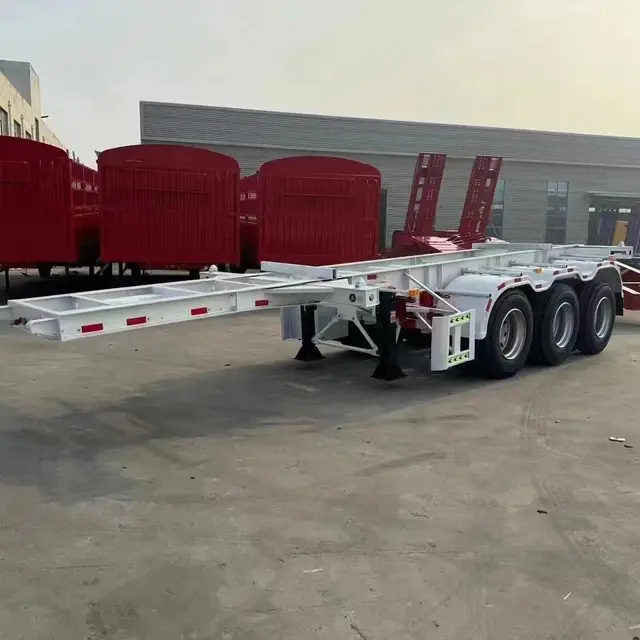
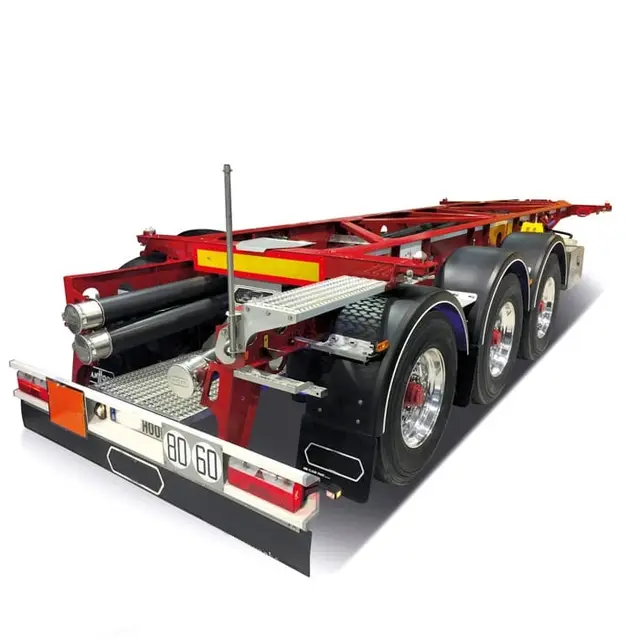
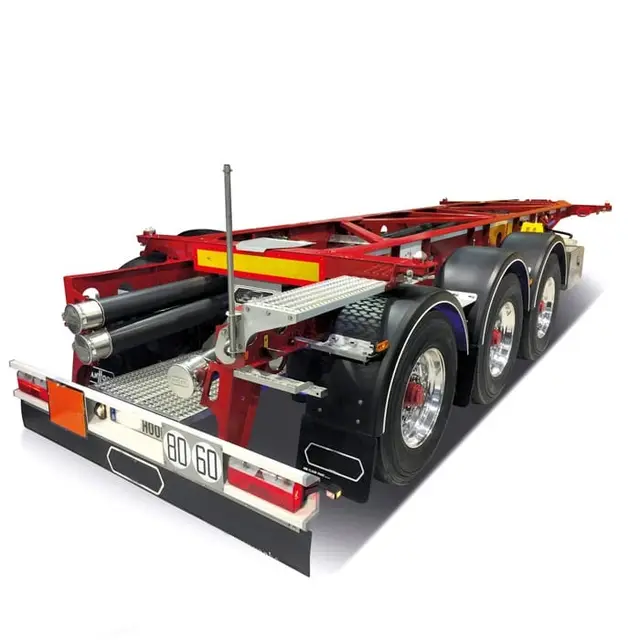
A skeletal trailer is stripped to its essentials: a high-tensile main beam (spine), front gooseneck, rear bogie, and four or more twist-lock corner castings that engage the ISO corner castings on the bottom of any standard shipping container. That design does two things at once. First, it minimises tare weight — a typical 40ft tri-axle skeletal weighs around 6–7 tonnes, versus 8–10 tonnes for a flatbed with a container frame. Every kilogram saved is payload you can sell. Second, the container becomes part of the structure: the box stiffens the frame so you do not need heavy cross-members, and the load sits low, improving stability on port access roads and highway runs.
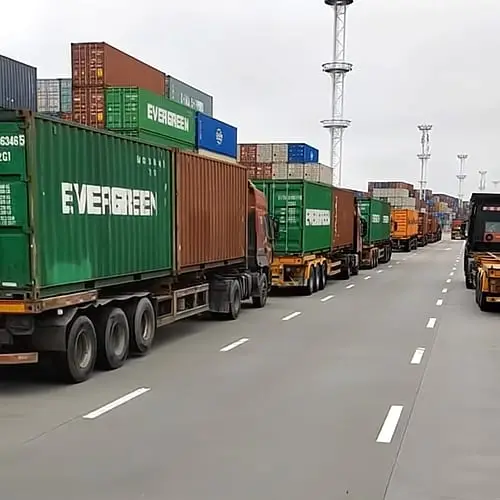
Because the container locks in rather than resting on straps, a skeletal trailer is also faster to load and unload at a container terminal than a flatbed. The driver positions, lowers the landing legs, and the crane or reach-stacker drops the box straight onto the twist-locks — no chains, no corner boards, no re-securing. For buyers running high-frequency port lifts in Mombasa, Durban, Lagos, or Jebel Ali, that time saving compounds quickly.
Configurations at a Glance
| Configuration | Container Fit | Axles | Typical Use |
|---|---|---|---|
| 20ft Single-Axle Chassis | One 20ft ISO | 1 (single or spread) | Port terminal shuttles, short haul, light-capacity corridors |
| 40ft Twin-Axle Skeletal | One 40ft or one 40ft HC | 2 (tandem) | Standard highway container haulage, sealed roads |
| 40ft Tri-Axle Skeletal | One 40ft / 40ft HC | 3 | High gross weight markets (South Africa, East Africa overloaded axle rules) |
| 2×20ft Skeletal | Two 20ft ISOs simultaneously | 2–3 | Split-load container depots, port consolidation |
| Gooseneck Container Trailer | 40ft with low deck height | 2–3 | Height-restricted routes, overheight containers |
| Extendable 20–40ft Chassis | Telescoping for 20ft or 40ft | 2 | Operators handling mixed container sizes |
The most requested configuration in our markets is the 40ft tri-axle skeletal, driven by South Africa's 56-tonne GVM limit and East Africa's increasingly enforced axle-load regulations. The 2×20ft option is popular among depot operators in Uganda and Tanzania who mix smaller container consignments.
Twist-Locks and ISO Corner Castings — What to Check
The coupling system is where a container chassis earns or loses its reliability. Every skeletal trailer uses twist-lock pins that drop into the oval holes of the ISO 1161 corner castings on the container base. The pin rotates 90° to lock. There are two main types you will encounter on used units:
- Manual twist-locks: The driver climbs and turns each lock by hand before departure. Lower cost, standard across most of Africa and the Middle East. Check that the locking handle is not bent or seized and that the spring return works.
- Automatic or semi-automatic twist-locks: The lock engages as the container is lowered. Faster for high-cycle port terminals. Check the release mechanism and confirm the lock indicator is readable from ground level.
During inspection, every twist-lock housing should be examined for weld cracks, elongation of the pocket (a sign of overloading), and seized or corroded pivot pins. Corner casting pockets on the trailer frame itself — the steel sockets the lock sits in — crack under repeated impact; probe these with a torch before accepting any unit.
Skeletal vs Flatbed for Container Haulage
Buyers sometimes ask whether a flatbed with container pins is a workable alternative to a dedicated skeletal. The short answer is yes for low-frequency use, but a skeletal wins on every operational measure at volume:
- Tare weight: A skeletal saves 1.5–3 tonnes compared to a flatbed carrying a container frame, directly increasing legal payload.
- Loading cycle time: No strapping, no checking of deck tie-rails. Twist-lock engagement is confirmed in under two minutes.
- Structural integrity: The container stiffens the skeletal frame — the combined unit is stiffer than a flatbed with a loose box.
- Maintenance: Fewer wearing parts on the deck. Twist-locks and the main beam are the main maintenance items.
Where a flatbed genuinely wins: operators who carry containers only occasionally and need the trailer for general cargo between container jobs. If your trucks are dedicated to container haulage — port to ICD, ICD to depot — a skeletal is the right tool.
Pre-Purchase Inspection Checklist
Before accepting any used container chassis semi-trailer, work through this checklist. We apply these checks to every unit we source:
- Main beam and gooseneck welds: Look for stress cracks at the gooseneck junction and at outrigger attachment points. This is the highest-stress zone on a skeletal.
- Kingpin and fifth-wheel contact: Measure kingpin diameter — worn pins cause coupling slop and are a roadworthiness failure in most African and GCC markets. Standard is 50mm (2 inch); maximum wear typically 49.5mm.
- Twist-locks (all four corner and any mid-frame): Rotate each lock through full travel. Check housing welds and pocket elongation.
- Suspension — leaf spring or air ride: Leaf springs: check for broken leaves, U-bolt tightness, and hanger cracks. Air ride: check air bag integrity, height valve operation, and levelling valve response.
- Brakes: Drum or disc, check lining thickness, S-cam bushings, and slack adjuster travel. Test ABS light response if fitted.
- Tyres and rims: Tread depth, sidewall cracking, and rim flange condition — critical in tropical markets where UV and heat accelerate sidewall degradation.
- Lights and electrics: All running lights, brake lights, and ABS connector. Many African border crossings reject trailers with non-functional lights.
- Frame straightness: A twisted or bowed main beam cannot be economically repaired. Sight down the frame from the rear before committing.
Tractor Pairing: 4×2 or 6×4?
A container chassis trailer is only as productive as the tractor pulling it. The right pairing depends on your road conditions and gross weight:
4×2 tractor head (single drive axle): Best suited to sealed, graded port access roads and paved highway routes. Lower tare weight means more payload and better fuel economy on flat terrain. Common pairings in UAE, Iraqi port terminals, South African N-road container runs, and Kenyan Mombasa–Nairobi feeder routes. See our in-stock HOWO 4×2 tractor trucks.
6×4 tractor head (tandem drive axles): The standard for rough-road inland distribution — Uganda upcountry, Tanzania interior, Nigeria off-highway, Iraq rural routes. Dual drive axles provide traction on unpaved roads and at soft-ground container yards. See our in-stock HOWO 6×4 tractor heads.
We can source the container chassis semi-trailer to match whichever tractor specification you are already running or plan to purchase. Giving us your axle configuration, GVM limit, and destination port lets us shortlist the right chassis quickly. All combinations ship CIF to your nominated port — Mombasa, Dar es Salaam, Durban, Lagos, Tema, Port Sudan, Aqaba, Umm Qasr, or others. Import documentation and certificate of roadworthiness are prepared for your destination country on request.
Container Chassis & Tractor Options
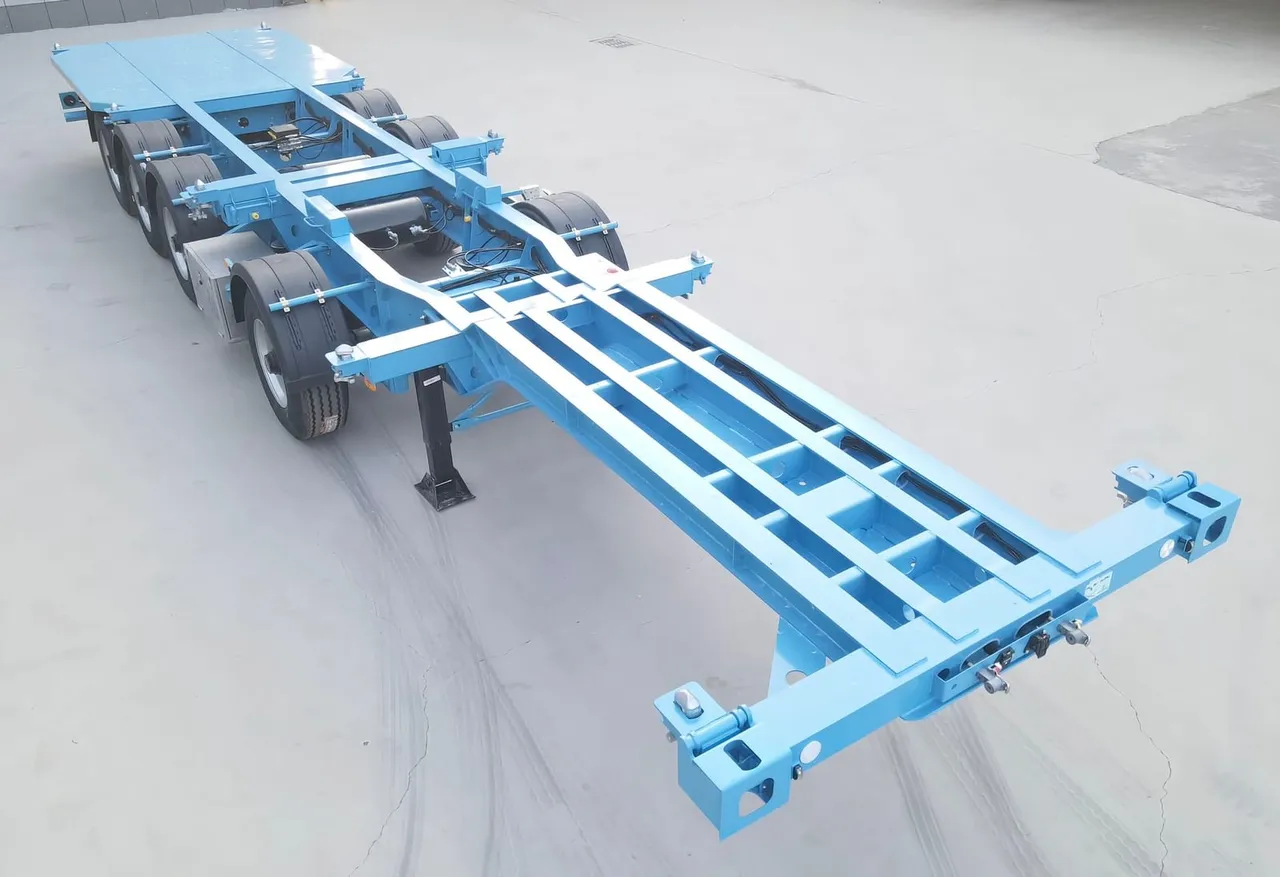
40ft Tri-Axle Skeletal Chassis (Sourced to Order)
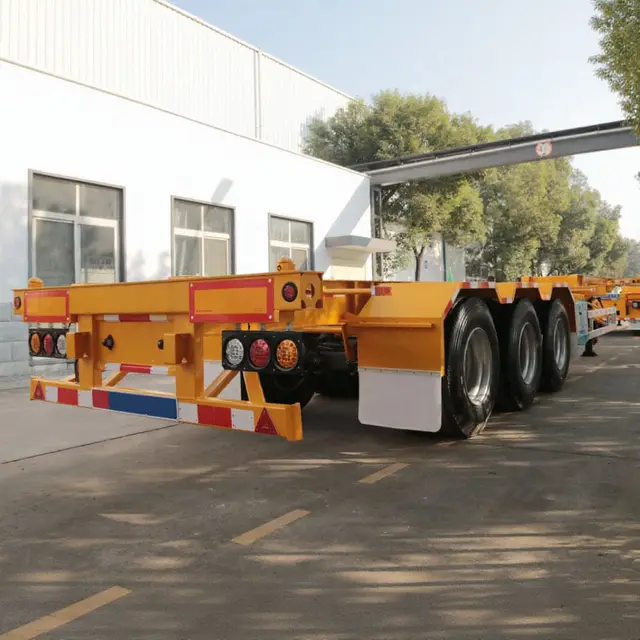
Three-axle skeletal frame for 40ft and 40ft HC containers. High-tensile main beam, manual or auto twist-locks, suitable for South African and East African axle-load regulations. Inspected and refurbished before shipment.
Enquire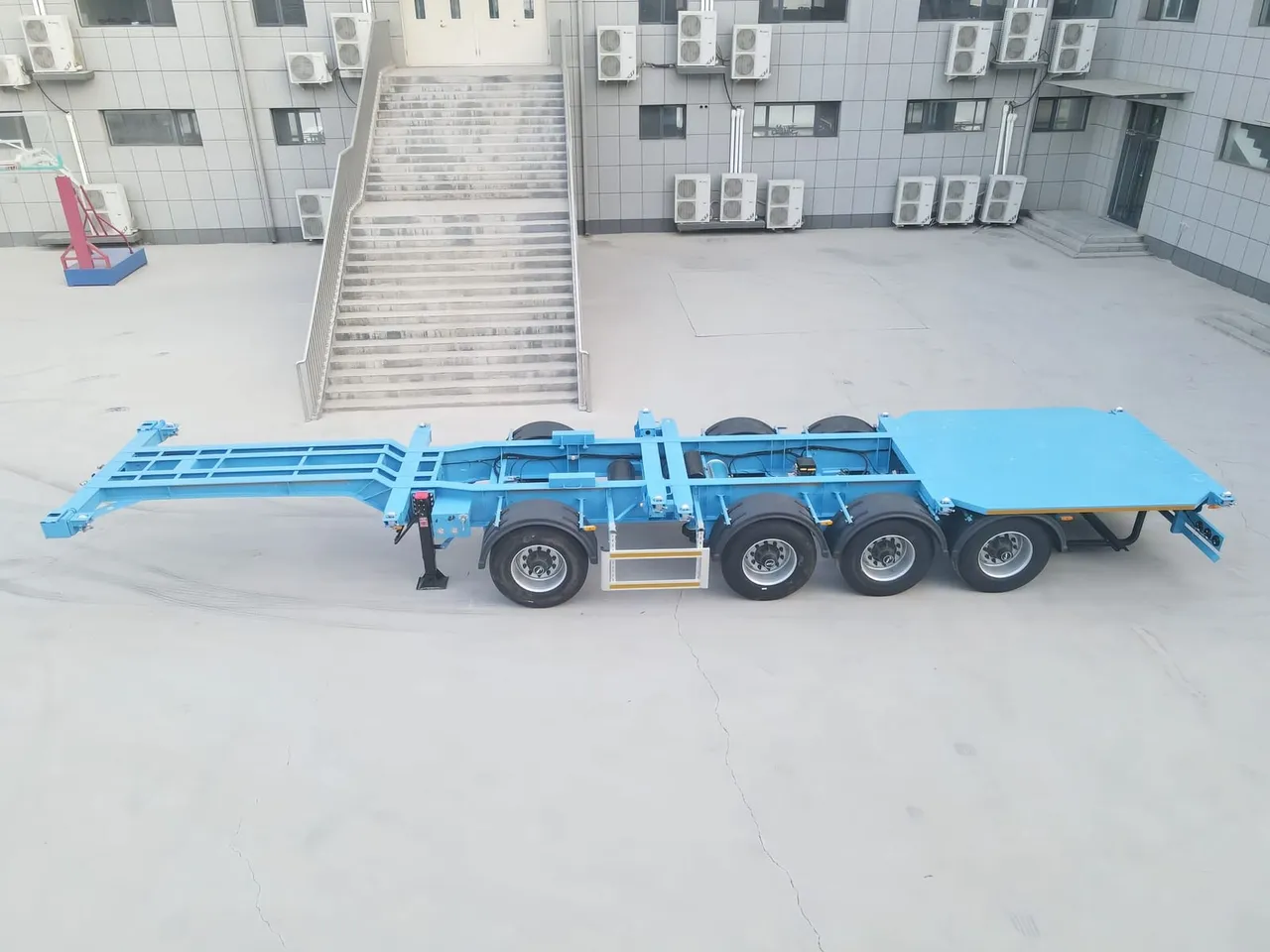
20ft / Gooseneck Container Chassis (Sourced to Order)
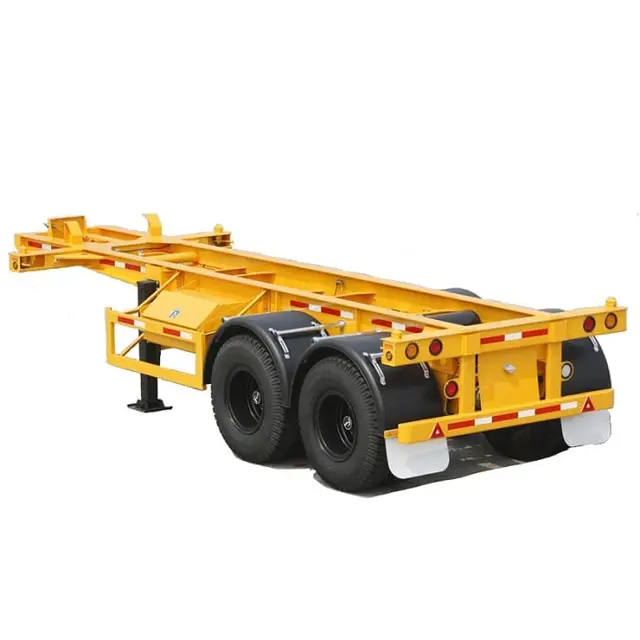
Single or tandem-axle 20ft skeletal chassis, plus low-deck gooseneck variants for height-sensitive routes or overheight containers. Available as 2×20ft configuration for split-load operators.
Enquire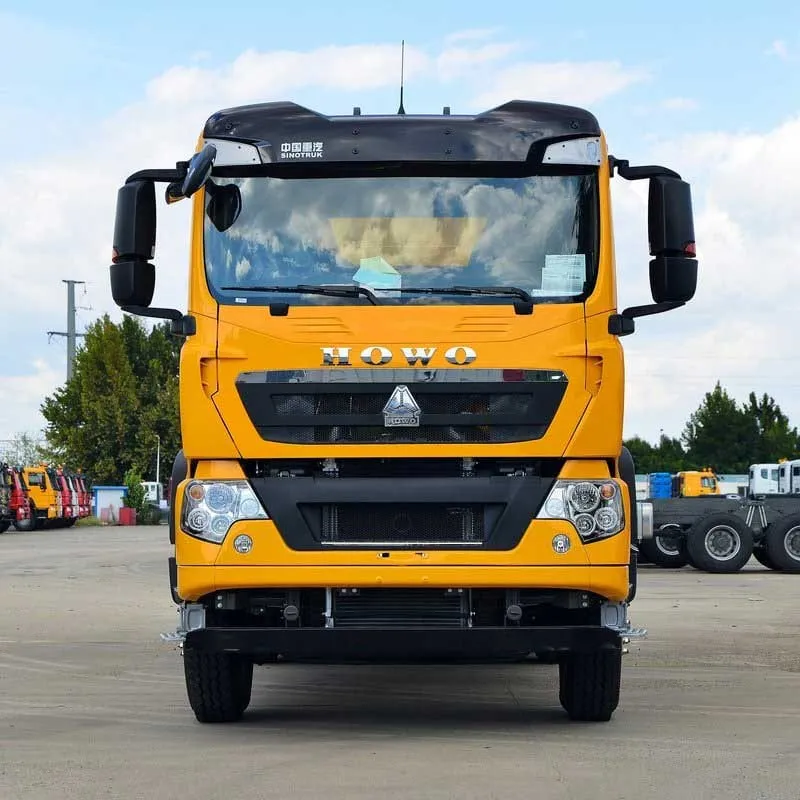
Matching HOWO 4×2 Tractor Head (In Stock)
In-stock HOWO 4×2 tractor units inspected and ready. Ideal pairing for sealed-road port runs and highway container haulage in South Africa, UAE, and Kenya. LHD and RHD available.
Enquire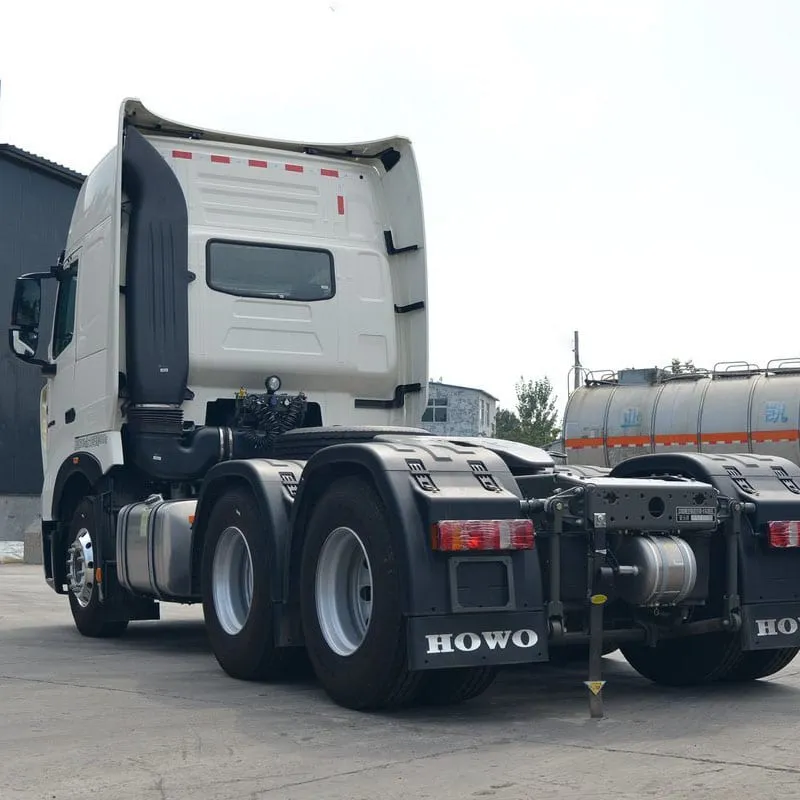
Matching HOWO 6×4 Tractor Head (In Stock)
In-stock HOWO 6×4 tractor units for rough-road inland distribution. Tandem drive axles handle unpaved container yards and upcountry routes in Uganda, Tanzania, Nigeria, and Iraq.
EnquireReal Photos — Inspected, Export-Ready Units
Actual stock and reference units we ship CIF to Africa & the Middle East. Every truck is mechanically inspected and refurbished before loading.
Frequently Asked Questions
What is the difference between a skeletal trailer and a container chassis trailer?
Can one skeletal trailer carry both 20ft and 40ft containers?
Do you sell container chassis trailers ex-stock, or only sourced to order?
What documents come with a used container chassis trailer for import?
Which tractor head is better for port terminal work — 4×2 or 6×4?
Send us your destination port, container size, and axle preference — we will source the right container chassis trailer and match it with an in-stock tractor head, quoted CIF to your port.
Reply within 24 hours — or WhatsApp us at +86 199 6378 9330.