
 English
  Français
  Español
  Português
  العربية
  Русский
  Bahasa Indonesia
  中文
中文 Used Dump Truck Buying Guide: How to Inspect Before You Pay
A dump truck earns or loses you money on two things: how much it carries per trip and how many days a year it actually runs. Both are decided before you pay, at inspection. This used dump truck buying guide is the checklist we use ourselves before a unit leaves our yard — engine, tipping hydraulics, frame, brakes and tyres — plus how to choose between 6x4 and 8x4 and the right body capacity for your work. Use it whether you buy from us or anyone else.
Start With the Job, Not the Truck
Before you look at any specific unit, define the work. A dump truck that is perfect for urban construction is the wrong truck for a remote quarry. Two questions settle most of the decision:
- How heavy and how far? Short urban tipping favours a lighter, more manoeuvrable 6x4; heavy quarry and mining overburden favours an 8x4 with more axles to carry the load legally.
- What surface? Soft, unpaved or steep roads punish underpowered trucks. Match engine power and axle count to the worst road the truck will see, not the average one.
Once the job is clear, the inspection below tells you whether a given unit can do it for years rather than months.
6x4 vs 8x4: Which Dump Truck Configuration
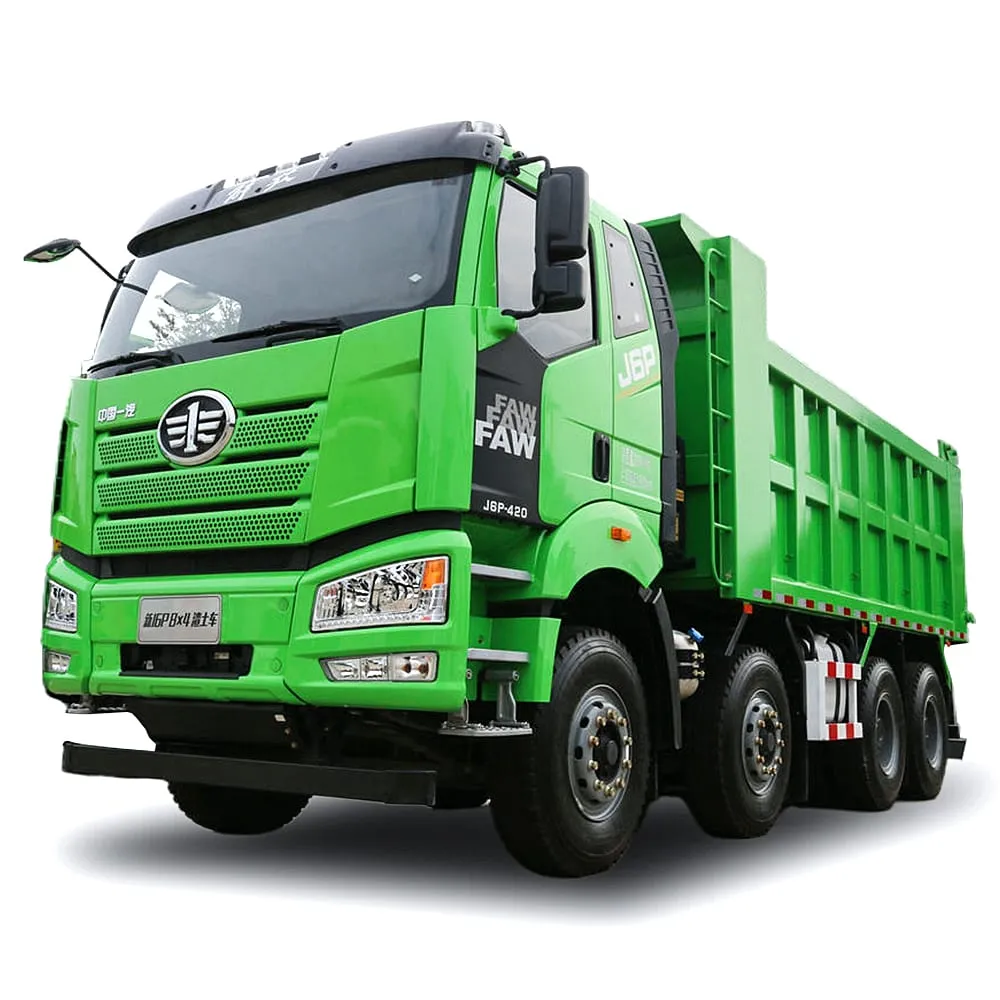
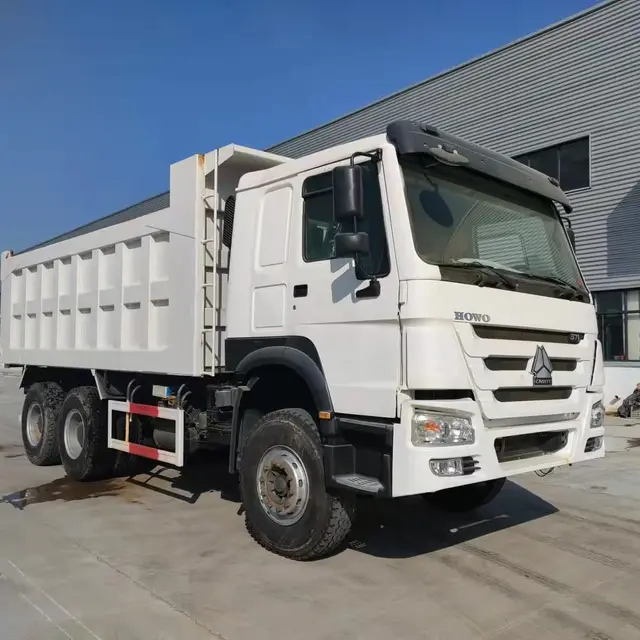
The most common choice in our market is 6x4 vs 8x4. A 6x4 has three axles — one steering, two driven — and a cargo box around 5.8 metres. It is lighter, cheaper, more manoeuvrable, and ideal for shorter haul cycles and roads with length limits. An 8x4 dump truck adds a second steering axle and a longer 7.6-metre box, letting it carry more weight legally for quarrying and bulk aggregate.
If you have heard the truck described as a 10 wheeler that is the 6x4; a 12 wheeler is the 8x4. Browse our 6x4 dump truck and 8x4 dump truck pages to compare the two side by side before you commit.
Dump Truck Capacity: Match the Body to the Load
Capacity is quoted two ways and buyers often confuse them. The dump truck capacity in m3 is the volume of the body; the payload is the weight it can legally carry. A high-sided box looks bigger but can overload your axles if you fill it with dense material like wet sand or ore. As a rule, a 6x4 box runs roughly 16–20 m3 and a typical 8x4 around 20–28 m3, but always check the payload rating against the density of what you haul. Buying more box than your axles can legally carry just gets you stopped at weighbridges.
The Inspection Checklist: What to Check Before You Pay
This is the core of any used truck inspection checklist. Work through it in order, and walk away from anything you cannot verify:
- Engine — Cold-start it yourself. Look for blue smoke (worn rings) or white smoke (head gasket/injector). Check for oil leaks at the sump and rear main, and confirm the turbo shaft has no excessive play. Ask for a compression reading per cylinder.
- Tipping hydraulics — The single most important check on a dump truck. Raise and lower the empty body fully two or three times. It should lift smoothly without juddering and hold position without creeping down. Inspect the hoist cylinder for oil weeping at the seals and the hydraulic hoses for chafing.
- Frame and body — Look under the chassis for cracks or amateur welds, especially around the rear bogie and hoist mount. Check the dump body floor for thinning or holes from years of loading rock.
- Brakes — Air should build quickly with no audible leaks. Check lining thickness front and rear and confirm the slack adjusters are within travel.
- Transmission and axles — Confirm clean gearbox and differential oil, no whine on a test drive, and no play in the prop-shaft joints or wheel bearings.
- Tyres — 12R22.5 is the standard size; check tread depth and look for uneven wear that signals an alignment or axle problem.
If you cannot attend in person, this is exactly why a documented inspection from the seller matters. Every truck we ship comes with an inspection record covering these points, so you know the condition before the unit is loaded.
Price, Refurbishment and Total Cost
The dumper truck price on the invoice is only part of the cost. A cheap truck that needs injectors, brake linings and two tyres in its first month is not cheap. When you compare units, ask what has already been refurbished and what you will need to budget for in the first operating year. A slightly higher price for a unit with new linings, fresh tyres and a documented engine service usually wins on total cost.
Be specific when you ask for a quote: state the configuration (6x4 or 8x4), the body capacity you need, your destination port, and whether you need RHD. That lets us quote CIF on a unit that actually fits your job rather than a generic price. Browse current used dump trucks and tell us your spec.
Frequently Asked Questions
What should I check when buying a used dump truck?
Is a 6x4 or 8x4 dump truck better?
What is the capacity of a dump truck in m3?
How much does a used dump truck cost?
Tell us your configuration, capacity and destination port — we'll send inspected stock photos, inspection records, and a CIF price within one business day.
Reply within 24 hours — or WhatsApp us at +86 199 6378 9330.